The Rise of Software-Defined Vehicles: Revolutionizing the Future of Automotive Mobility

The automotive industry is currently undergoing one of the most profound transformations in its history. This paradigm shift is driven by the emergence of Software-Defined Vehicles (SDVs). As vehicles evolve from purely mechanical modes of transport into sophisticated electronic devices on wheels, the value proposition of the automobile is moving from hardware to software. This article explores the architecture, benefits, and challenges of SDVs and how they are reshaping the future of mobility.
Defining the Software-Defined Vehicle (SDV)
Traditionally, a vehicle’s functionality was determined almost entirely by its hardware components. Once a car left the factory, its capabilities were static. In contrast, a Software-Defined Vehicle is a vehicle whose features and functions are primarily enabled through software. This evolution allows for the management of vehicle operations, adding functionality, and enabling new features primarily through software updates rather than hardware replacements.
In an SDV, the physical machinery acts as a platform, while the software defines the user experience, driving dynamics, and safety protocols. This decoupling of hardware and software facilitates continuous improvement throughout the vehicle’s lifecycle.
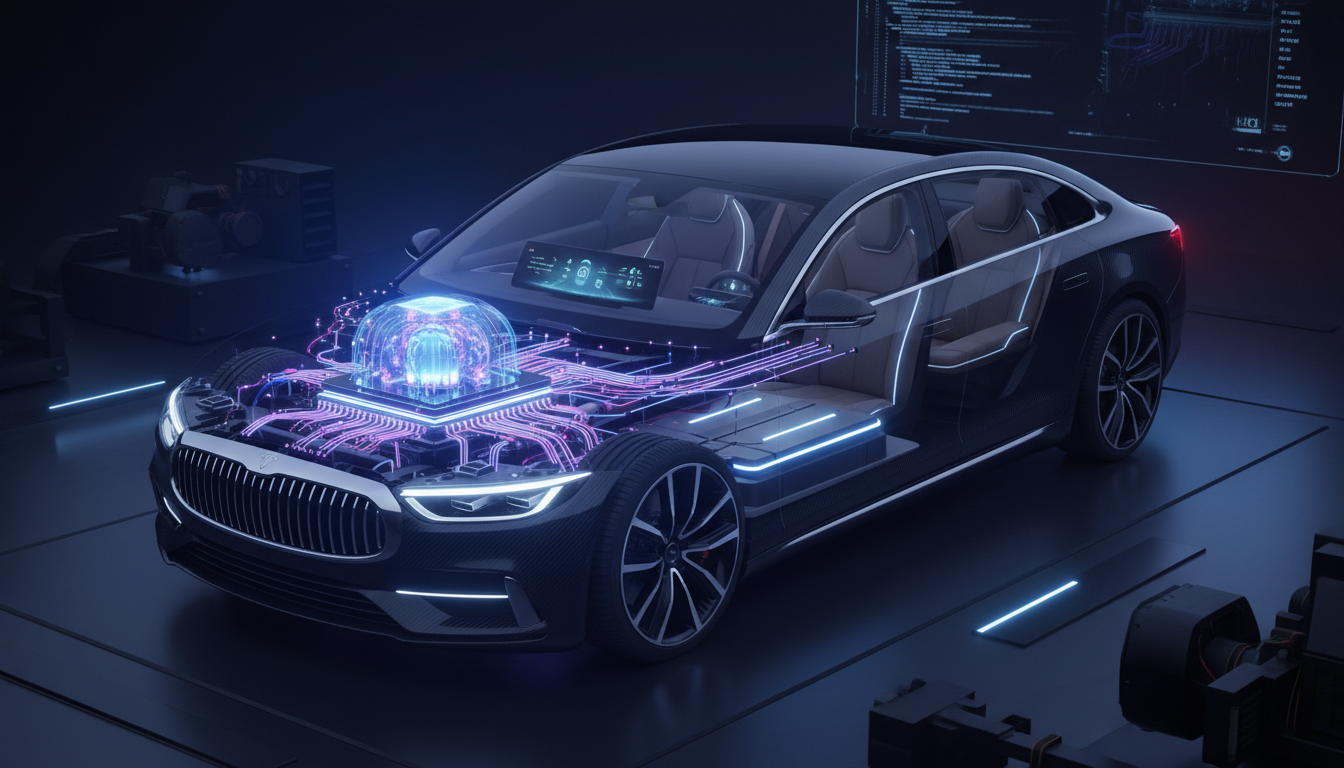
Key Architectural Characteristics
To support the transition to SDVs, automotive electrical and electronic (E/E) architectures must undergo significant changes.
- Centralized Computing: Legacy vehicles often utilize dozens of distinct Electronic Control Units (ECUs) for specific tasks. SDVs consolidate these into fewer, high-performance domain controllers or central computers, reducing wiring harness weight and complexity.
- Over-the-Air (OTA) Updates: Similar to smartphones, SDVs can receive wireless software updates. This capability allows manufacturers to patch bugs, enhance infotainment systems, and even improve powertrain efficiency remotely.
- Cloud Connectivity: SDVs maintain a constant connection to the cloud, facilitating real-time data exchange for navigation, diagnostics, and vehicle-to-everything (V2X) communication.
The Strategic Benefits of SDVs
The transition to software-defined mobility offers tangible benefits for both consumers and Original Equipment Manufacturers (OEMs).
For the Consumer
Consumers benefit from a vehicle that improves over time. Through OTA updates, an SDV purchased today can possess better autonomy features or a more responsive interface three years down the line. Furthermore, it allows for high levels of personalization, where drivers can configure digital dashboards and driving profiles to their exact preferences.
For the Manufacturer
For automakers, SDVs open new revenue streams through subscription-based features (Function-as-a-Service). Additionally, the ability to diagnose and fix software-related issues remotely can significantly reduce warranty costs and the logistical burden of physical recalls.
[IMAGE_PROMPT: A close-up, photorealistic shot of a driver’s hand interacting with a sleek, futuristic car dashboard interface displaying a ‘System Update Complete’ notification with new feature icons, set during twilight for dramatic lighting.]
Challenges in Implementation
Despite the clear advantages, the road to fully Software-Defined Vehicles is fraught with technical and organizational challenges.
1. Cybersecurity: As vehicles become more connected, the attack surface for malicious actors increases. Ensuring robust encryption and intrusion detection systems is paramount to passenger safety.
2. Legacy Integration: Established automakers must bridge the gap between legacy manufacturing processes and modern agile software development.
3. Data Privacy: SDVs generate massive amounts of data regarding location, driving habits, and vehicle status. Managing this data in compliance with global privacy regulations (such as GDPR) is a complex legal hurdle.
The Future Outlook
The trajectory of SDVs is intrinsically linked to the advancement of autonomous driving. As vehicles move toward Level 4 and Level 5 autonomy, the software stack will become the single most critical component of the car. We can anticipate a future where the distinction between a tech company and a car company becomes increasingly blurred, leading to partnerships that leverage the strengths of both silicon valley innovation and Detroit’s manufacturing heritage.
[IMAGE_PROMPT: A photorealistic, wide-angle shot of a futuristic smart city street with multiple autonomous, software-defined vehicles moving seamlessly in traffic, connected by visible digital data streams illustrating Vehicle-to-Infrastructure (V2I) communication.]
Conclusion
Software-Defined Vehicles represent more than just a technological upgrade; they signify a fundamental restructuring of the automotive business model. By prioritizing software, the industry is moving toward a future that is more connected, efficient, and user-centric. As this technology matures, the vehicle will cease to be a static product and will instead become a dynamic platform for continuous innovation.